From Spokane Public Radio, it’s SPR News Today.
- With Election Day so close, Governor Bob Ferguson is urging voters to use the ballot box instead of the mailbox.
- Spokane County poll workers have already started counting ballots
- And S-P-R’s Doug Nadvornick chats with BallotPedia’s Ryan Byrne.
Those stories and more, coming up on SPR News Today.
________________________________________________
Election day is tomorrow, and Washington’s Governor is urging voters to use their local ballot drop boxes. Reporter Sarah Mizes-Tan has more.
Governor Bob Ferguson dropped off his ballot in a chunky, white ballot box at the edge of a parking lot in Olympia on Friday. He flashed a thumbs-up sign and said voters should consider using dropboxes provided by their county, instead of mailing their ballot this close to election day.
FERGUSON: we're seeing an increasing number of folks who actually vote on time, they drop it in the mailbox thinking it'll get postmarked, but it doesn't get postmarked in time.
State officials say changes to the postmarking process have led to more ballots being disqualified.
In the August primary, around 20 thousand mail-in ballots across the state arrived too late to be counted, despite being mailed before election day.
The deadline to turn in ballots is 8pm on November third.
In Olympia, I’m Sarah Mizes-Tan
________________________________________________
Idaho Governor Brad Little says the state refunded more than 250-million dollars to residents last year as part of the state’s grocery tax credit.
That’s 50-million dollars more than the year before. The state Tax Commission says more than 800-thousand claims were filed.
________________________________________________
Election Day is tomorrow [Tuesday], and Spokane County poll workers are busy counting ballots. S-P-R’s Ember Braun went to the county elections office to watch.
Elections office staff members go out and collect ballots from drop boxes. They bring them back to the office in colorful bags. Then, they verify signatures and get ballots ready for tabulation.
Here’s Spokane County auditor Vicky Dalton.
DALTON: “You get done with your rack of trays, you take a deep breath, and then somebody rolls in with the cart filled with bags of ballots, and you start it all over.”
But what happens if a ballot gets challenged?
DALTON: “If a ballot envelope gets rejected, it's because they either forgot to sign or the signature doesn’t match. So we send a letter out immediately to the voter to explain what the problem is, what the steps are they can take, and then they need to get that back to us by Nov. 23.”
Dalton says they’re seeing a lower percentage of rejected ballots than normal.
Ahead of Election Day, staff have set up voter service centers at two locations: The Spokane County Fair and Expo Center and the CenterPlace Event Center. You can go there if you need to register to vote, drop off your ballot, get a replacement or use an accessible voting unit. Those locations are open today and tomorrow.
Drop boxes will close at 8 p.m. on election night.
I’m Ember Braun reporting.
________________________________________________
The Washington Insurance Commissioner's office says it has approved health care plans for nine companies that want to sell policies to small businesses in 2027.
But premiums will, on average, be significantly more than last year. The agency says the average rate increase will approach 17%.
Commissioner Patty Kuderer says the costs are high, but businesses at least have several options to choose from when they buy policies for their employees.
________________________________________________
Six of the eight races for Spokane County District Court judge in tomorrow’s election feature only one candidate.
One of the contested races features two experienced judges.
Mike Valerien is a full-time court commissioner in Spokane Municipal Court. Deanna Crull has served as a fill-in court commissioner and pro tem judge across several municipal, district and tribal courts.
District Court is a high-volume institution. It handles more than 46,000 cases a year, mostly traffic and misdemeanor-level.
Deanna Crull describes her judicial philosophy as “compassionate accountability.”
Deanna Crull: “Obviously upholding the law. Applying the Constitution and the law is first and foremost. But then is this an individual where we can intervene at this point in time, or is this an individual where, okay, we've tried X, we've tried Y, we've tried Z, now it's just time to impose jail.”
Valerien touts his 10 years of experience as a court commissioner. He says part of a judge’s job is educating the people who come before him.
Mike Valerien: “Most of the time when I'm in court, I'm making somebody upset. Somebody's not getting their way. And there are gonna be people in court that simply are not going to accept the outcome, no matter how clearly I explain it, no matter how firmly grounded it is in the law.”
The other contested race in Spokane County District Court features Nicholas Ulrich and Michael Addams.
________________________________________________
The federal government is sending Pend Oreille County nearly $9 million to partially fund a highway and railroad safety project.
U.S. Senator Maria Cantwell says crews will improve the crossing where the Pend Oreille Valley Railroad track intersects with Highway 20. They will also repair several miles of track between Usk and Cusick.
________________________________________________
North Idaho College says it is now the state higher education institution with the fastest-growing enrollment.
The college reports it has about 4,800 students this fall, up nearly 200 from last fall. That’s a 3.7% increase.
NIC says new student enrollment is up nearly 9%.
Administrators say it continues a trend of enrollment gains, dating back three years. Across the state, college enrollment decreased slightly from 2025 to 2026.
________________________________________________
Reading a ballot measure can be difficult for the average voter. SPR’s Doug Nadvornick sat down with someone who is trying to make it easier.
BallotPedia reviewed the language of all 164 statewide measures this election. It found that Idaho’s advisory question about an official statewide firearm is the easiest to understand. It was written at a fifth-grade level.
The most difficult to figure out was a measure in Colorado, which was written at a 48th-grade level.
We bring in the managing editor for BallotPedia’s project, Ryan Byrne, to talk about how it determines this.
Ryan Byrne: We're just evaluating the reading level using some standardized tests, but there is academic research that takes it the next step and does that work. And what that research has found is that when the reading levels are higher, voters are more likely to skip them or get confused and not necessarily answer the way that maybe they would have wanted to answer.
DN: So you take the ballot language, and tell me a little bit more about the tool that you use to evaluate it.
RB: Yeah, we use something called the Flesch-Kincaid grade level, which is a tool that was actually utilized by the U.S. government historically to evaluate, say, Defense Department documents. Because when you're in a war field or something like that, you want it to be readable and you have to think very fast. So we're utilizing the same system to evaluate ballot measure language.
So what we do is we plug in the language, and it's based on words and sentences. So it's not so much about whether the idea is complex, it's about how complex the sentences are.
DN: And then you assign essentially a grade level to each one? Is that the way it works?
RB: That's correct, yes. This is, again, a tool that was all the way developed back in the 1940s through the 1970s. It was being iterated on for the U.S. military. So we did not develop the system ourselves. We're utilizing kind of a long-established system. But what it does is it creates the score, and then this score correlates to a grade level.
Of course, as we can see in the report, some of these grade levels are not existent. They're extremely high. They're like 40th grade. There's no such thing, which basically just means this is very hard.
DN: You made sort of a comparison both at one end and the other one. Maybe the simplest ballot measure is one from Idaho, and you're asking the question about what should be the official state gun versus one in Colorado that's almost like graduate level or even more than graduate level. Can you talk about that range?
RB: Yeah, there is a wide range in these. I think there's the Idaho example, but even if we just look at states, it's from like grade level 10 in a handful of states, including Massachusetts to Kentucky and Tennessee, all the way up to an average of grade level of like 33 in Colorado.
So it varies quite a bit, and states have different laws governing how ballot measure language is written, which influences this process. And in recent years, some of them have adopted laws to try to make the language clearer, which has had various effects.
DN: Oh, so?
RB: So we've been looking at when those laws are passed, and then do these reading scores change? Overall, they do change, and they move in the direction of making the language more readable. It's often not to an extent that maybe is claimed beforehand when the law is being passed. We still don't see these things go down to, say, eighth grade reading level, but usually they do. They move in that direction.
I think some examples are like New York State in 2023 passed a law, and their average reading levels fell from something like 15 to 11. So at least we're now more in high school range.
So we've seen things like that happen over time, or Arkansas, where there was an even bigger drop. But it doesn't always stick. In Rhode Island, they passed a law, and it actually went up kind of counterintuitively. Now, they may be using a different system. That's part of it, too. We're using this one called the Flush-Kincaid system. We use it because the U.S. government uses it, and it's long established. But there are many different tools for evaluating the reading level of a ballot language.
DN: How should we interpret this? I mean, is it necessarily better to have something that's written at a fifth grade level or a sixth grade level, or should we have initiatives that require a little bit of sophistication?
RB: Yeah, that's a good question. It's not one that I'm prepared to make a judgment on.
But I think, to your point, is that these are complex policies. You may take this and make the language so simple that you're not actually communicating what the policy does anymore. And there are some times where you see a ballot initiative question gets a very low score and seems quite readable. But then you look at it yourself, and you go, well, the words are simple, but I'm still not really sure what it does. So this is measuring things like words, structure, syllables. It does not get at the idea. That requires a bit more of a subjective evaluation.
DN: What is the practical result of your report? Does it get results from states?
RB: Well, I don't think any of the states have directly reached out to us. I think what it does is it brings attention to the fact that even just looking at the structure of sentences, we're asking people to understand these incredibly complex, often very long run-on sentences involving a lot of legalese.
DN: Ryan Byrne is the managing editor of the Ballot Measures Project at BallotPedia.
By the way, here is the language for the advisory question for the Idaho ballot measure in question: Which of the following guns shall be designated as the state gun of Idaho? Please choose only one answer.
That was SPR’s Doug Nadvornick reporting.
________________________________________________
SPR News Today is a production of Spokane Public Radio.
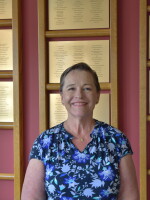
Reporting today was contributed by KUOW’s Sarah Mizes-Tan, Ember Braun, Audrey Nelson, Doug Nadvornick, and me, Lisa Leinberger - today’s host and producer.
Web support is provided by Anna Gyure Havlek.
Thanks for listening. This is SPR.