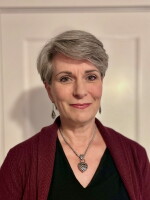
A few weeks ago, a small organization called Pages of Redemption dropped off hundreds of books at the Airway Heights Correctional Facility. The project – and the non-profit – were created by Bryson Fico, who works as the jury coordinator for the Superior Court system in Okanogan County. Fico talked recently with SPR’s Kyrsten Weber.
This interview has been lightly edited for clarity and time.
Kyrsten Weber: Bryson, tell me about Pages of Redemption and how Pages of Redemption started.
Bryson Fico: Pages of Redemption is a little nonprofit organization I started back in September of 2023. I drive around Washington State and I donate paperback books to jails and prisons.
As of today's date, I have donated precisely 8,702 books across 14 different correctional facilities.
KW: Is this a solo effort?
BF: I like to say it's a solo effort because I do the majority of the heavy lifting, but I do require help from other people and organizations. Community members donate books to me.
I have friends that will help me if I have a big donation like when I just did this one to the Airway Heights Prison. I had over 2,000 books and one of my friends came out and drove around and helped me donate those books. I partner with friends of the library organizations in University Place, Ellensburg, and Wenatchee.
I also partner with a New York Times bestselling author, J.A. Jantz. She resides in Bellevue, Washington. She donates all of her author copies to me.
KW: What was the impetus to start Pages of Redemption?
BF: I graduated from Central Washington University with a bachelor's degree in law and justice and sociology. I was trying to figure out what I wanted to do next.
I know I wanted to start my own organization because I've been an active volunteer since I was 16 years old. I always continued my volunteer efforts throughout college and I decided to start my own organization utilizing my degree. I tried to think, how can I help society and accomplish a task that I think I can do on my own? I've always been an active reader.
My mom was a sixth grade reading and English teacher. I figured people who are sitting in prison don't really have a lot of opportunities for self-betterment. This is a way for them to pass their time positively and learn something.
I started researching all these statistics and facts. The average life expectancy of a correctional officer in the U.S. is 59 years, compared to the national adult average like you and myself of 79 years. 70 percent of incarcerated adults across America's prisons read at or below a fourth grade reading level.
It's not only beneficial to the inmates, but it's also beneficial to the correctional staff and society at large because if we can educate them and give them opportunities for self-improvement, when they're released, they have a better chance of success.
KW: How did you get the organization started? What were your first steps?
BF: My very first donation was at the Kittitas County Jail in Ellensburg, Washington, and my very first donation was 88 books. I had no idea what I was doing at first.
This was just simply a thought and an idea that I had. So I looked on Craigslist and Facebook for garage sales and people who were giving away books, and I went to bookstores in downtown Ellensburg asking if I could have any books collecting dust on their shelves.
Throughout those efforts, it was about like a three-week effort. I amassed 88 books total, and then I took that to the prison in Ellensburg. After that, I discovered what Friends of the Library is.
I walked into the Ellensburg Library after completing that donation, and apparently I made it in the newspaper in Ellensburg, and they were like, we were waiting for you to show up. And so ever since then, I've always had that relationship to go collect books from them. And then I kind of learned, you know, I can maybe make posters and hang them around the community, get community members involved, go talk to businesses.
So I started doing that. I approached my department at Central Washington University, the Law and Justice Building, and they agreed to host annual book drives for me. I partnered with Friends of the Library groups in Wenatchee, Omak, Okanogan, Winthrop, Twisp, and University Place.
And then the New York Times best-selling author, J.A. Jantz, discovered what I was doing and sent me an email, and we've been partners ever since.
KW: Are you looking to expand your connections with library groups to increase the numbers, or are you about at capacity right now?
BF: I'm always looking to make new connections, because the more people that are willing to help, the better I can do my job and bring more… books into prisons and jails across Washington State. I mean, I've taken donations from individuals in Omak, Mukilteo, Yakima.
I've had ladies from Friday Harbor and the San Juan Islands contact me. So yeah, I'm open to pretty much anywhere.
KW: How many jails and correctional facilities have you donated to as of now?
BF: Twelve jails across Washington State and two prisons.
KW: What sort of feedback have you gotten from prison officials? Have you had any interaction with any of the prisoners who've been recipients of your donations?
BF: Oh yeah. The superintendent of the Airway Heights Corrections Center already emailed me saying he was super thankful for us swinging by and dropping off the books and thanked us. I've received emails from people who were formerly incarcerated who found out about what I've done and said, “Thank you. I really appreciate it.”
And people who maybe haven't, who've been to a jail that I haven't yet visited, but know of what I do, and I'll get an email or a message on LinkedIn saying, have you been to this prison yet or this jail? I think they could really use your help.
KW: Have you been able to see what kind of shape the libraries are in before your donations?

BF: Actually, I have. I've been able to do a couple different tours of some facilities. Most recently, I live and I work in Okanogan County, Washington, and I was able to do a tour of the Okanogan County Jail, and they had absolutely zero books in that facility. So immediately, I started working with the sheriff's office and the chaplain, and we were able to donate over 300… books to that facility, and now we're close to 500 books within that county jail.
And then also, I drove to the Colville Tribal Correctional Facility in Okanogan County, and they didn't have any books either, so I was able to give them 200 books as well.
KW: So it sounds like there is a significant need at these jails.
BF: Yes. Some jails, they're good. They already have way too many books on hand. I've gotten emails like that when I reached out to Pullman, Washington.
Some facilities are actually getting rid of their books and going strictly to tablet-based platforms, which is government-controlled reading, which I'm not a big fan of because I don't think you can really escape into a different behavioral mindset unless you're holding a physical book. I think actual paper in your hand is better than a tablet. There's a correctional facility in Coeur d'Alene, Idaho that they are actually getting rid of all of their paperback books in 2027, and I spoke with the chaplain over there, and he was talking about maybe donating those books to me so I can take them to a jail in Washington, so that might be something I do next year.
Grant County, Washington also just built a brand new jail this year, and they've already transferred all of their inmates to that facility, and they actually denied me access to come bring them books. They don't want any books in their facility. They strictly want a tablet-based platform, which is something I've outwardly spoken against.
KW: If people want to get involved, what do you recommend?
BF: Find me on LinkedIn. That's where I post all of my updates regarding Pages of Redemption, where I'm planning on traveling to next. Send me a connect request, and maybe shoot me a message, and I'll respond to anybody who tries to message me.