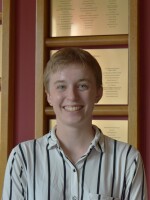
CaitLynn Burt peered down at a tangle of burned wreckage. She was standing on what used to be her back patio, staring at what used to be her home. Below her, five archaeologists in white Tyvek suits and respirators sifted through the rubble.
They were looking for the box that had held Burt’s mom’s ashes. Tara Rooney died 12 years ago, when Burt was just 16.
“She was very smart,” Burt recalled. “She was the one who was always helping me with my math homework.”
Burt kept Rooney’s ashes in a cardboard box, in the North Spokane duplex she rented with her husband, Keenan. Then, on Aug. 1, wildfires overtook Spokane. The Burts were out of town at the time. They watched social media videos of their home burning to the ground.
“My brain and body just kind of went into survival mode,” Burt said. “And it was — I almost just didn’t feel anything. You know, it’s just like it’s another loss.”
She paused, then repeated: “It’s just another loss.”
Burt thought her mom’s ashes were gone for good — mixed in with toxic debris and bound for a waste disposal site.
“I know it’s just physical, and she’s always there with me no matter what, but just having that would just be really meaningful,” Burt said.
Then she heard about a California-based nonprofit called the Alta Heritage Foundation. The foundation’s volunteer archaeologists recover previously cremated human remains from homes destroyed by wildfires. They call what they do a “humanitarian service,” and offer it for free.
Chelsea Rose is a historical archaeologist with Alta Heritage.
“It’s really surprising,” Rose said. “Over the hundreds of recoveries we’ve done to date, we’ve really developed techniques for recognizing ashes within ashes.”
Before Rose and her colleagues actually sift through that ash, they use cadaver dogs to get an idea of where remains may be.
Lori Blackburn is a search and rescue handler from Oregon. She and her dog Cagney came north to assist with the Spokane wildfires.
“This is kind of like your own holocaust, in terms of losing everything and the state that these buildings are in,” Blackburn said. “If we can help in any way to help find somebody's family remains, there's those of us that are going to do that.”
As CaitLynn and Keenan Burt watched, Cagney took an initial lap of their property. She paused, then lay down near the back of the home — alerting Blackburn that she scented human remains.
The archaeologists moved in.
Emily Taber is Alta Heritage’s treasurer and client coordinator. “We tend to cut in more like we’re cutting into a cake, because that exposes in profile what we’re looking for,” she explained.
Another archaeologist is Anna Coon, from Spokane.
“I was looking for differences in what we were sifting through,” she said, pausing her work. “I was looking for color differences, I was looking for texture differences. I was trying to feel, as I took the trowel back and sifted things closer to myself, if the consistency changed so that I could feel it in my hand.”
After about 45 minutes of clearing and sifting, Taber, Coon and their colleagues took a break. Taber said the dogs had most likely alerted at what’s known as a “scent pool” — a kind of false alarm.
Sure enough, on their second pass, the dogs alerted near the house’s chimney. This time, the archaeologists found an intact ceramic vase.
“Oh yeah, that was on the shelf!” CaitLynn Burt said. “That was on the shelf!”
Eventually, archaeologist Kassie Rippee filled up a plastic bag with fine gray ash. She brought it out to the Burts.
“We can say with confidence that there’s some material in here, some of the cremains in here,” she said. “So we wanted to bring that back to you.”
Burt took the bag, then gave Rippee a hug. She laughed when she imagined what she’d say to her mom if she were there.
“She’d probably be like, ‘What the hell are you doing, man?’” Burt said. “What the hell are you doing wasting all this time on me right now?”
Burt stopped for a second.
“Yeah,” she said, sobering. “But I would just tell her I love her and I miss her.”