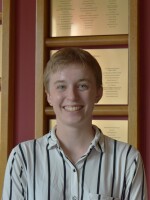
A researcher who specializes in psychedelics as medicine visited Spokane this week. Nathan Sackett directs the Novel Therapeutics in Addiction Psychiatry (NTAP) Center at the University of Washington’s School of Medicine. His research focuses on using psychedelics to treat substance use disorders.
Sackett gave a lecture at Gonzaga this week as part of a partnership with UW Medicine. Before the talk, SPR's Audrey Nelson sat down with Sackett to learn more about his research.
The following interview has been edited for length and clarity.
NATHAN SACKETT: From a medical perspective, we generally think of psychedelics to include compounds that act on a specific receptor. So we say that a classic psychedelic is one that acts on the serotonin receptor, or 5-HT2A, to get scientific. That generally includes psilocybin, LSD, and mescaline. Those are sort of the — I would say — the most well understood psychedelic compounds.
Historically, we've studied psychedelics in a sort of medicinal context for about 100 years. And as people are probably aware of, with the counterculture revolution in the 60s and 70s, psychedelics became a target of anti-establishment, counterculture badness. And that led to a period of prohibition. And then in the 80s and 90s, a group of researchers began to re-explore these compounds.
I think the sort of cultural shift in the last couple of years has been driven by the huge need for more treatments — for everything from depression to PTSD to substance use disorders. I think it's becoming increasingly clear that, yeah, we really need more options available to folks.
AUDREY NELSON: So you look specifically at treatment for addiction, for substance use disorders. What can you tell me about the effect of psychedelics on the brain in that context?
NS: Yeah. So behavior change is hard. It's hard to get people to floss their teeth every day, let alone change behaviors that can become very entrenched — like using substances habitually.
Where I see psychedelics being very powerful is it can amplify and intensify progress in a shorter period of time, so people don't become frustrated and throw their hands up and give up.
I think right now because of a lot of the cultural enthusiasm, some of the nuance is lost, and people are overemphasizing the compound itself. It's not just, “If I give you some psychedelic, I'm going to cure X.” It's the psychedelic, in conjunction with therapy and other sort of treatment modalities, will hopefully warrant better results.
AN: And can you actually get specific about how that would work if you introduced a psychedelic along with therapy? What might that look like in a clinical setting with a patient?
NS: Yeah, that's a great question. It looks just like going to your therapy — like going to any therapist's office. The difference is after you do some therapy and you have an understanding of what you're getting into, you then come on the day of drug administration, and you have a therapist in the room, and the drug is administered, and you sit with them for six hours. And then next week they come back and continue the therapy.
AN: Because these drugs have not been approved by the federal government yet, what do clinical trials look like right now?
NS: Yeah, it's a challenge right now. Working with Schedule One compounds poses a lot of logistical challenges. From the participant's perspective, it doesn't look that different than any other clinical trial.
You come in, you give consent, and if you meet the criteria, well, then you are enrolled in a study, and you get either placebo or you get active compound.
I expected people to be very clear: “Oh, I got placebo, nothing happened.” What I've been surprised by is that for some people, the placebo experience is also very powerful. I mean, when in your life do you have two therapists in the room with you, sitting, staring at you for six hours? That's a unique experience. So I would say most people know whether they got placebo or not. But that said, even for those who receive placebo, we try to talk to them about — let's still lean into this experience and utilize it in some therapeutic way.
AN: Do you have fears that people will try to use this as a self-medication, or use them in ways that aren't supervised under clinical trials and settings?
NS: What worries me is because there's so much enthusiasm for this topic and there are so many people who are struggling so intensely, that there are people who are willing to make or take great risks to try to get some sort of treatment. And I do worry about those folks.
I'm a big believer that we need to study these compounds. I think there's a great potential there. But I really hope that we don't make some of the mistakes that I feel we made in, say, cannabis, in making it widely available without a lot of supervision. That does concern me at times.
While these compounds are generally considered safe, safe is relative. And there are harms that can be done. And we need to be thoughtful and very intentional about who gets these compounds and under what circumstances.